Posted on Leave a comment

Are You Training or Trending?

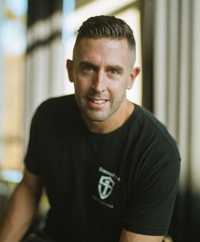
I’ve asked my good friend and fellow strength and conditioning coach to help me out with some writer’s block.  Jonathan Carroll and I go back a little ways to the glory days of interning at MBSC.  Since then, we have stayed in touch and attended a few different continuing ed events together.  He has since moved to Raleigh, North Carolina and is now co-owner of The Movement Lab Raleigh.  If you want to learn something then definitely look into this guy’s blog and podcast!


how-to-get-a-bigger-butt

Since I moved from Boston to Raleigh and opened up my own gym I have realized there is a crossroads when it comes to selling training. A lot of people want what is sexy and social media does a great job reinforcing this. There are many trends such as “build your booty programs” and “high intensity everything” as well as “random acts of fitness” thrown together because of the gram! What isn’t sexy though is just plain old “good training”.

Don’t get me wrong, there are parts of the trends that we can embrace and make into legitimate training protocols to get stronger, just look at what Bret Contreras has done with hip thrusts. Hip thrusts were once an exercise that was scoffed at and are now more widely accepted as being a legitimate way to get stronger and build a powerful pair of glutes. My favorite trend though was and still is “Prancercize” – I use this on my recovery days.

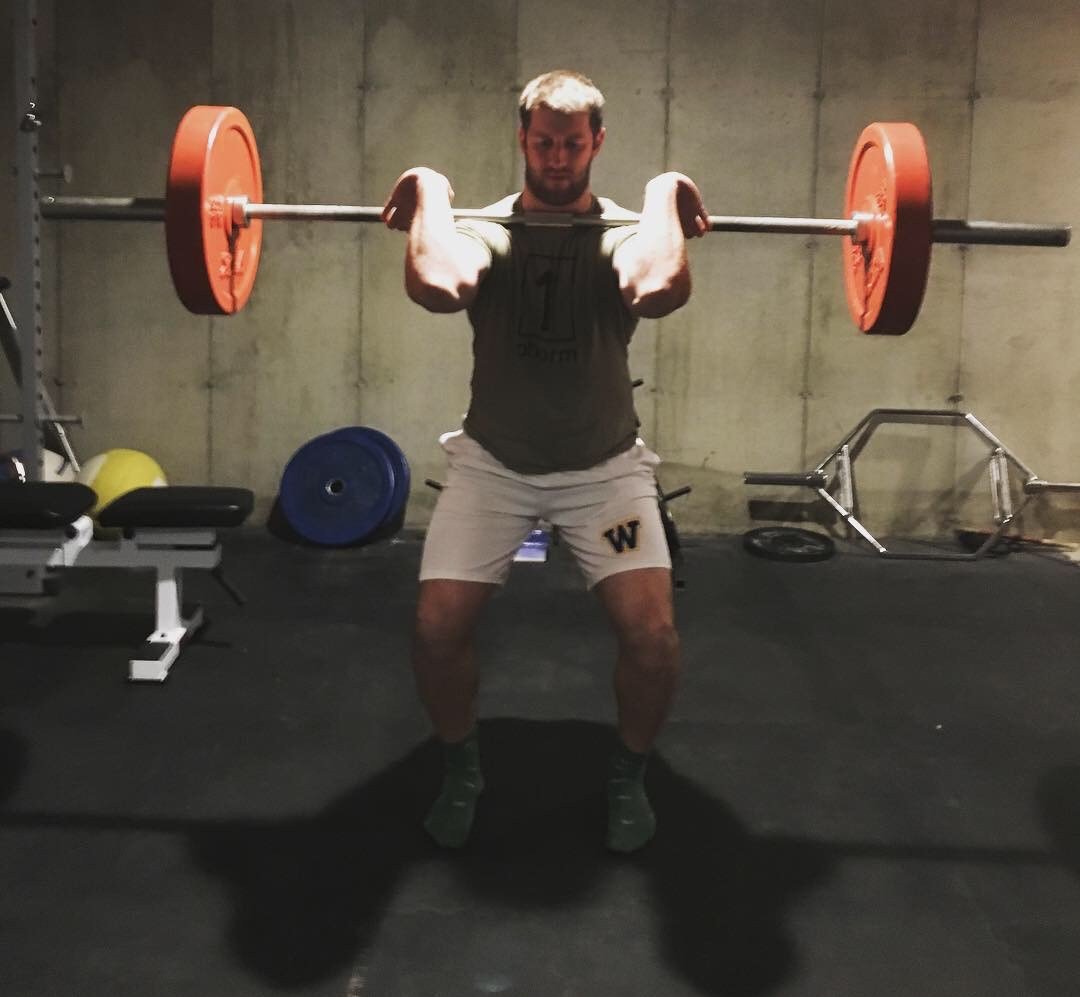
Let’s address what exactly good training should include. Are you incorporating the following movements? A hip-hinge, squat, a push, a pull, and anti-extension, anti-rotation abs? At The Movement Lab we have these classified as our foundational movements. Once someone has become proficient at these we will then look to progress to our level two movements such as Kettlebell Swings, Turkish Get Ups and Kettlebell Snatches. The thing is, as a gym owner who knows what good training is – it’s not an easy sell compared to an instagram model in yoga pants and a smoking hot body who is doing the latest version of her for purchase booty program and magical unicorn supplement that has been proven to help a booty grow. In the words of Jay-Z, ” I Can’t Knock the Hustle”. However, when it comes to using a training program that will positively enhance your life, nothing comes close to accomplishing this quite like plain old good training.

A lot of people may want what is currently “hot”. If someone has an amazing body then that means everyone should do what they are doing to get the same results, right? Eh, not exactly. You see a lot of the fitness models on instagram or in fitness magazines are people who have won the genetic lottery. Their training alone didn’t get them that body, in fact they probably have that body despite their shoddy training protocols. Having interned and worked at Mike Boyle Strength and Conditioning you get to connect with a lot of great coaches who recognize what good training consists of. Simply put, that consists of doing the basics, really well and with lots and lots of practice thrown in. The programs these coaches as well as myself use with the people we train never really veer off course from the main categories listed in the foundational moments above.

You’ll get stronger, improve your quality of life, live longer and when combined with solid amounts of deep sleep and nutrition you’ll probably reach those aesthetic goals of yours as well. The most pleasing feedback from the people I’ve coached down through the years include things like:

“I haven’t felt this good since I was in college”

“I can play with my son and daughter and not be out of breath inside of five minutes”

“Last week my doctor took me off my blood pressure medicine”

You get the idea. I haven’t reinvented the wheel, it’s simply good training practices passed on and practiced over and over. Getting better takes time and in an age where we want it now and not a second later, doing the same program for a month can seem like a year to some. We incorporate the StrongFirst principles at The Movement Lab” such as “Strength has a greater purpose” which you can see in the quotes listed above. We also believe that:

“Strength is a skill”

Yes, you need to practice it. The key to reaching your goals in the gym rest in this quote, not an expensive supplement or a flashy new exercise. Learn the basics and then practice them over and over. To this day I still learn something new when I set foot in the gym. Believe me when I tell you, training is a lifelong process but also one heck of an enjoyable one.

With that I challenge you to explore your current training program and ask the question, am I getting better? You can still keep some main elements in your program constant without changing up everything you do. Here are some ways you can mix things up without changing what you’re doing:

  • Manipulate sets and reps
  • Add time under tension (eccentric, pause & concentric reps)
  • Body awareness. What muscles do you feel when you are performing different exercises?
  • Can you get into the required position to optimally execute a sumo deadlift or a double kettlebell front rack squat etc
  • Add a plus set as your last set in the form of AMGRAP (As many good reps as possible

IMG_3307

Don’t get caught up in trending fitness protocols and just keep training. Small steps are the way forward, Rome wasn’t built in a day. A lot of progress can be made in a year. Don’t believe me?Journal your training for a year based on a program from any good strength coach and you’ll see progress you didn’t think was possible.


photo
Jonathan Carroll
Co-Owner, The Movement Lab
857.523.9437
themovementlabraleigh.com
Posted on Leave a comment

Is Stretching Beneficial Prior to Working Out?

In a way this article title is a loaded question.  Over the years, there have been a number of different theories regarding the type of stretching you should do prior to and after exercise whether it was aerobic or resistance training.  Hopefully I can better explain what I use in my methods and why.

Static Stretching

In a nutshell, static stretching is simply trying to isolate a muscle group and statically holding it on stretch in hopes that it will elongate the muscle fiber.  Some people will go to extremes with this one, but just like anything we should probably avoid the extreme ends of the spectrum (unless you’re a dancer, gymnast, someone who needs to be a human pretzel).

There has been a number of research studies regarding the efficacy of static stretching prior to and after exercise in hopes that this was in fact the answer to all of our problems.  If we stretch prior to exercise or games, we will not get hurt.  If we stretch after exercise or games, we won’t get sore.  Unfortunately, it doesn’t quite work like that.  Soreness hopefully by now is understood to be something dealing with volume and eccentric stress on the muscles.  It appears to have something to do with a build-up of Hydrogen ions on the area which I realize doesn’t mean too much to the average person trying to learn something here.  Stretching prior to exercise didn’t appear to have any great attributes either.

IMG_4104
Glute Stretch

I will often do some level of static stretching in the very very beginning of the warm up.  I like to open up the hips for starters, and if you take a step back and see that most individuals have chronic tightness in the same areas secondary to our high tech, sit at your desk, kind of lives.

IMG_6407
Groin Stretch


Bouncing/Ballistic Stretching

I think that last reference to this type of stretching was in 1924?

Half kidding.  If you’re still doing this type of stretching you either have been cryogenically frozen for the last 100 years, or you believe that whatever science says is false.  Bounce stretching leads to more injury.

PNF

Stands for Proprioceptive Neuromuscular Facilitation, is an awesome tool for us physical therapists who want to eradicate increased tone with neuro patients, or individuals who are licensed to increase range of motion in someone who is potentially tight.  I don’t say it this way to seem arrogant, but, we health enthusiasts are super eager to show off the new tools we bought at a weekend course.  I agree that it is exciting, but why do we do anything?  We should always have a why, and there is no reason to perform PNF stretching on someone when we can do it either non-manually or realize that it isn’t appropriate for some individuals.

If I do it with my athletes/clients, it is non-manual.  I will often find a way to trick that individuals perception of what is happening.  For example, band leg lower.

Dynamic Stretching

Not necessarily stretching in the sense that you hardly take your muscles into end range of motion.  Instead, you’re gearing up for the upcoming day of exercise or games.  You mimic some of the basic movements that you’re about to do which will prime the muscles and nervous system up without overload as well as raise the bodies core temperature as you’re moving.  That’s what has been shown to reduce injury, increasing body temperature.

I’ve witness a number of strength facilities, physical therapists, athletic trainers, and sport coaches teach athletes/adults how to do dynamic exercises in a way that doesn’t seem logical.  To me, it doesn’t make sense to go 0-100mph without testing the brakes and accelerator first.  So why start with skipping and high knees just to turn around and slow everything down with some knee hugs?

We will use dynamic stretching prior to doing our movement and sprint drills.  This is our last piece of the warm-up in some ways before we ask the athletes/clients to push themselves.  We will start with slower, more controlled movements first and progress to low level running or even sprinting depending on who we are working with.

Putting it Together

So, an example of our warm-up would be:

foam roll, static stretch, mobility, activation, dynamic

For the items not highlighted here, I covered it in another post, check it out here and for part 2, here.

Posted on 2 Comments

CBD oil case study

One of the new trends lately is CBD oil which is a derivative of the cannabis plant that most people associate with marijuana.  If you look closely on the shelves of some of your grocery stores or even your favorite coffee shop you will find CBD infused items all over the place.  Curiosity got the cat, so I will try.

CBD is traditionally used to help people with certain DSM diagnoses that will relieve anxiety, pain, some movement disorders, and cognition.  The stuff that you buy in the store is without THC unless otherwise noted.  THC is the active ingredient in marijuana that creates the “high” effect.  So basically once you tell someone about CBD, you will also have to explain to them that there isn’t THC.  Potential side effects were listed, but the only ones that caught my eye was malaise and weakness.

As far as I know I don’t have any psychoactive issues.  I’m not trying to treat a self diagnosed version of anxiety or anything like that.  Believe it or not I personally have a difficult time falling asleep especially on Sunday night.  Whether it is because I stay up too late on Saturday night combined with the sleeping in that I sometimes do on Sunday morning, or if it is because I stay up mind racing with the things I need to get done at work the next day I will lay in bed restless.  I have a number of clients who have been taking CBD oil because someone told them that it may be good so I decided I would give it a try.

CBD
Dropper of CBD oil

Day 1

I actually woke up 40 minutes before my alarm went off after 7 hours of uninterrupted sleep.  I felt wide awake and ready to go.  I hadn’t fallen asleep and stayed asleep like that for a while so that was refreshing.

Day 2

I fell asleep relatively quick this night, however, I worked late and had a late dinner so there was no waking up earlier than the alarm.  I actually resented my alarm going off and felt a little groggy until the afternoon.  Sleep quality was still really good.

Day 3

I worked even later on Tuesday night and had a really late dinner.  Not ideal, but it is my reality.  I woke up around 4 a.m. briefly, but made it back to sleep no problem.  I tallied about 6 hours of sleep and was pretty groggy all day Wednesday until the late afternoon.

Day 4

I fell asleep relatively quickly again.  I did wake up in the middle of the night again, but that may be a result of drinking too much water later on in the day.  My motivation to get things done in the afternoon dropped significantly until about 3 p.m., but remain pretty groggy.  Work ended around 6 p.m. and I was able to go home and relax which was welcoming.

Day 5

I had Friday off so I was able to get an extra hour of sleep followed by a relaxing morning.  I could take my time getting my morning tea without any pressing deadlines.  I was able to sit down and write a little and go out to run some errands and felt much better with the extra rest.  I did go to a Celtics game that evening with some work colleagues, but felt normal.

Celtics Game
Pretty awesome seats

In conclusion, the week trial revealed to me that maybe on Sunday night it is a good idea to get some CBD in for the sleep aid.  All-in-all it did feel better than taking melatonin all week, anecdotally.  I will most likely continue to use it especially on those Sunday nights.


Posted on Leave a comment

Thoughts on Olympic Cleans

There are plenty of ways to coach and teach the clean and for a variety of different reasons.  What I mean is that you have the hang clean, power clean, olympic clean, etc as well as different grip options, lead up options, and accessory exercises.  That’s a lot to consider when planning how to develop power in a particular individual.  Here I’ll try and talk my way through the thought process I use.

For the most part, my primary demographic has been high school and college athletes.  I have worked with some professional athletes as well as general population, however, the primary is high school/college athlete.

With this population, I am trying to increase expression of certain qualities as well as increase performance on tests.  When it comes to how the coaching staff views a particular player coming in to preseason, the tests they’re going to perform is the window they use.  If you can wow the coaches with performance on these tests, there is a good chance that the athlete you’ve been working with will see the field.  It must be stated (I can’t believe that it does) that if the player is hurt because of bad coaching/programming/etc then it doesn’t matter.  That athlete would be a moron to return to your facility.

The tests that I have to improve my athletes performance on is usually some sort of sprint test as well as some sort of jumping test as it applies to the use of an olympic clean.  Of course the athlete will improve with performing the exact test, but that’s not good enough.  Of course the athlete will improve the test as you improve sprinting technique and jumping technique, but that too is still not good enough.  This is where knowing a thing or two about exercise physiology/exercise science comes in handy.  This is the why of using olympic lifts or loaded jumps, and as it pertains to this particular article, the hang clean specifically.

Why a hang clean vs. a traditional olympic clean or power clean?

Clean start (front)
Clean finish (front) With proper hook grip and all

A power clean or traditional olympic clean both start from the floor and can be too technical for the novice.  My job isn’t to create olympic lifters, it is to create an expression of power with athletes.  If I want an athlete to pull from the floor, I’ll simply add a version of deadlifts into their program.  Also, I like to measure power because I’m a nerd, and like physics.  If my start position and my end position are the same for my hips, what is the total displacement?  Makes it a little easier to measure.

The traditional Olympic Clean requires an individual to lift as much weight as they can from the floor to their shoulders in an effort to get them ready to Jerk the bar overhead.  The bar really doesn’t move all that far as you’re trying to minimize the distance that the bar has to travel, making it a little less challenging.  Also, you have to have amazing hip mobility to do well with this activity.  As has been stated before by many a famous pop artist, “hips don’t lie”.

The power clean is a crazy spawn between the Olympic clean and the hang clean.  You take the bar from the floor to the rack position as fast as you can.  Typically, this turns into back injuries and disgusting mechanics.

Hang Clean start (side)
Notice the hips

Hang Clean finish (side)


Depending on the sport, there are a couple of ways to load the clean as well.  Traditionally for all sorts of lifting, we meat heads like to load the bar with as much weight as we can perform while still using good form.  In certain cases this isn’t warranted.  For non-contact athletes–think soccer, baseball, basketball, tennis, golf, etc–we don’t need to use a huge weight to elicit a response.  Instead, we are able to use as little 40 per cent of what they’re able to use to still get adaptation.  This will virtually be a total expression of power here where these athletes are cued to move the bar as fast as they can.

For contact sports, like hockey and football, we need to add a little weight.  They will still get the expression of power that the other athletes are getting, but they will also get weight acceptance which is huge.  Think about a 200 pound man hitting you into a wall at 25 miles per hour.  That’s the sort of weight acceptance that needs to be encouraged.  You can get a little fancy and do a heavy hang clean day and a light hang clean day as well.  Personally, I like to have my lighter hang cleans, and my compound clean varieties be in the offseason where I am trying to improve the wear and tear from the previous season as well as movement composition.  Then I’ll get heavier as the season comes into view.

Hang cleans promote triple extension–ankle, knee, hip–as well as fast movement.  So does sprinting, and so does jumping.  Get really good at the hang clean for your athletes and you’ll be giving them that extra edge that they need to improve over the rest of the field.

Posted on Leave a comment

New Year, Simple Start

It’s that time of year again.  Everyone is planning on doing the right thing and the gyms are starting to pick up.  Almost everyone you speak to is on the “keto diet” as of the first of the new year.  So many great intentions, so little sustainability.  Here’s a quick reference guide for the new year.

Diet

The word diet is more a statement of what you consistently consume as opposed to the 8 week fix that you’re about to embark on.  Instead of jumping on the bandwagon of the newest fad diet that will inevitably fail, choose the healthy option.  What exactly is the healthy option?  The technical answer is that it depends on a host of information that is impossible to answer in one generic blog post.  But, it is possible to give a generic outline that you can plug and play with. The following is  a simple cheat sheet that you can use that is a heck more sustainable that getting extreme.

For Ladies

To maintain your current bodyweight/body fat consume roughly 1 palm size portion of lean protein, 1 fist portion of veggies, 1 handful of starchy carbs, and 1 thumb of healthy fats/oils.  To drop bodyweight/body fat simply cut out some of the starches.

For the fellas

Double what the ladies consume.

For a more detailed list of healthy foods and complete food composition, check out Precision Nutrition’s website.

Sleep

Whatever you do, get appropriate amounts of sleep.  This isn’t always possible if you have newborns or crappy neighbors, but ultimately you should be able to your sleep pretty regularly.  I’ve made mention of this in the past with an entire article, but the jist of the information is that in order to progress you need your sleep.  There are a number of sleep aids out there.  Melatonin seems to be the simplest choice, but now CBD is jumping into the mix.  If you’ve read my material before and you’re still looking at your phone in bed before trying to sleep, why?  Blue light emission from your phone/tv/tablet/computer can inhibit melatonin production in your body for up to two hours.

Exercise

If you are currently working with a professional, continue to do so.  Who couldn’t benefit from someone else pushing you and tracking your information.  Anything or anyone that promises to get a quick fix is just looking to get your money.  There is no magic pill here.

We can break exercise down into a number of different categories, however, resistance training and some sort of conditioning work are the most effective at achieving your goals.  There are certain populations that need to be careful about what they do and how they do it, but the evidence is pretty clear that exercise seems to positively impact everything.  Doing yard work and house work does not constitute exercise.  Walking does not constitute exercise unless you were unable to walk prior to starting a walking program.  Including upper body pushes and pulls, as well as lower body hip hinging and knee dominant work (squats) are a good starting point.

In conclusion, start to implement these simple tasks into your daily routine and you’ll find that your goals will start to come to fruition.  Seeking out a qualified individual who has experience in not just the exercise aspect of well-being, but in the entire performance envelope will be greatly beneficial.  This way you can have all of this information monitored.  Looking for an exercise physiologist or exercise scientist degree and an appropriate certification is usually a good place to start.